
Zander
Sander lucioperca
A low-light predator with glassy eyes and a taste for deeper, coloured water.
Also known as: Estonian koha, Finnish kuha, Norwegian gjørs, Swedish gös.
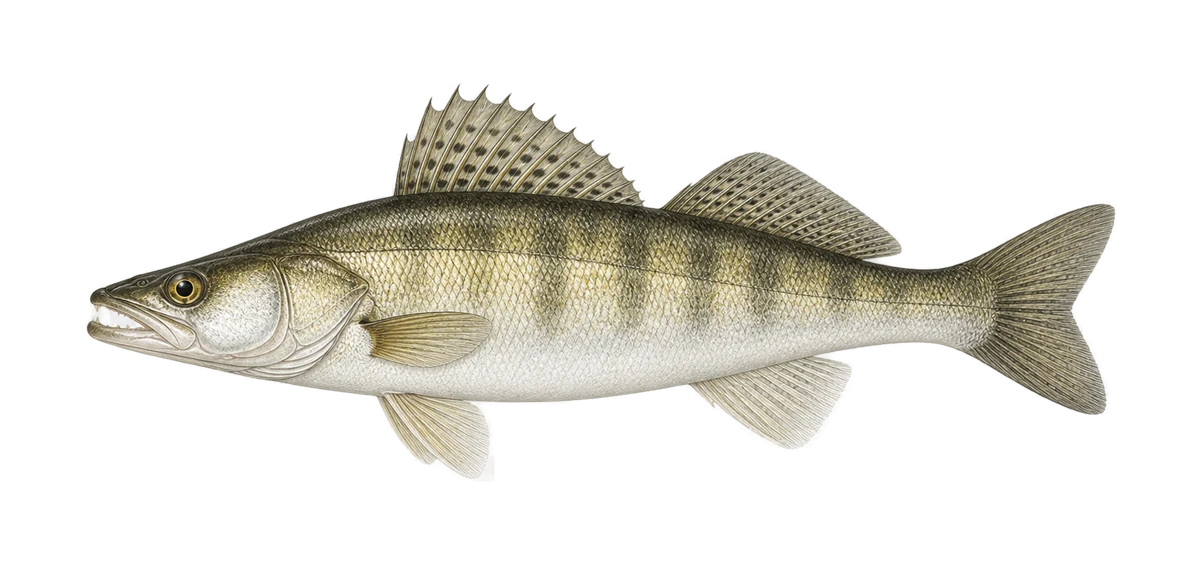
- Typical size
- 40 to 60 cm
- A big one
- Over 80 cm and 5 kg is a specimen
- Where it lives
- Deeper, coloured lakes, large rivers, and brackish bays
- Best time
- Summer nights, dawn and dusk, and into the autumn
- Common methods
- Soft plastics on a jig head, trolling, and dead or live bait
About the zander
Zander (also called pikeperch) are built for low light. Their reflective eyes let them hunt at dusk, through the night and in coloured water where other predators struggle. They are a prized eating and sport fish across the Baltic region, and a step up in challenge from pike and perch.
Catching zander
Fish the low-light windows and work the bottom, zander sit deep and hug drop-offs, channels and current seams. Keep contact with a jig as it falls, most takes come on the drop and feel like a soft tap. A soft rod tip and a firm, timed strike help with their bony mouths.
Before you fish: closed seasons, minimum sizes and catch limits differ by country and by water, and they change. Always check the current local rules and buy any licence you need before you go.
Log your zander in FishandBeer
Every species has a place in your collection. Log the zander you catch with size, photo and notes, and watch your collection fill in day by day.